If you’re searching for how to buy a domain name permanently, there’s one important thing to understand before you spend a dollar: you cannot actually purchase a domain name forever with one lifetime payment.
Instead, domain names are registered for a specific period and renewed before they expire. For many common domain extensions, registration can typically be made for up to 10 years at a time. If you want to keep the domain for decades, the practical solution is to combine a reputable registrar, a long registration period, automatic renewal, strong account security, and accurate contact information.
This guide explains exactly how domain registration works, how to choose a good domain name, how to secure it, what happens when a domain expires, how domain transfers work, and what to do if you eventually need to change your domain name.
Quick answer: You cannot buy a domain name permanently or “forever” as a one-time purchase. You register it for a defined period and renew it. ICANN says domain registrations are typically registered for one to 10 years, depending on the domain and applicable registry rules. r2
Can you buy a domain name permanently?
No. A domain name cannot normally be purchased permanently with a single lifetime payment.
When people say they “bought” a domain, what they generally mean is that they registered the domain name for a specified period. You receive the right to use and manage that domain during the registration term, subject to the applicable registration agreement and policies.
ICANN explains that domain names are typically registered for between one and 10 years and must be renewed if you want to continue using them. If you allow the registration to expire, you can eventually lose the domain. r3
So when someone searches for how to purchase a domain name permanently or how to purchase a domain name forever, the better strategy is not to look for a mythical lifetime domain plan. Instead, focus on making your registration as difficult to accidentally lose as possible.
How do you keep a domain name forever?
You cannot guarantee permanent ownership through a single purchase, but you can maintain continuous registration for as long as the domain remains available to you and you comply with the relevant rules.
A good long-term domain strategy looks like this:
- Choose a domain that you can use for many years.
- Register it through a reputable registrar.
- Choose the longest registration period available and appropriate for your domain.
- Enable automatic renewal.
- Keep your payment method current.
- Secure your registrar account with strong authentication.
- Enable registrar/domain locking where available.
- Keep your registrant information accurate.
- Monitor renewal and expiration notifications.
- Keep records of important DNS and domain settings.
ICANN specifically recommends staying informed about renewal requirements, paying registration fees on time, and keeping contact information up to date so you receive renewal reminders. r4
How many years can you register a domain name?
For many popular domain extensions, you can register a domain for up to 10 years at a time. However, the exact registration period can vary depending on the top-level domain (TLD), registry rules, registrar, and circumstances.
For example, .com, .net, and many other widely used extensions commonly support multi-year registration. Country-code domains and specialized extensions can have their own eligibility requirements and registration rules.
ICANN states that domain names are typically registered for one to 10 years. Always check the specific terms for the extension you intend to register rather than assuming every domain has exactly the same maximum term. r5
Can I register a domain for 10 years?
Yes, many domain extensions allow a 10-year registration term. If your registrar and chosen TLD support it, registering for a longer period can reduce the number of times you need to manually renew the domain.
However, a 10-year registration is still not permanent ownership. When the registration period approaches its end, you need to renew it again.
For an important business domain, a long registration term can be useful, but it should not replace automatic renewal and account security.
What is a website domain?
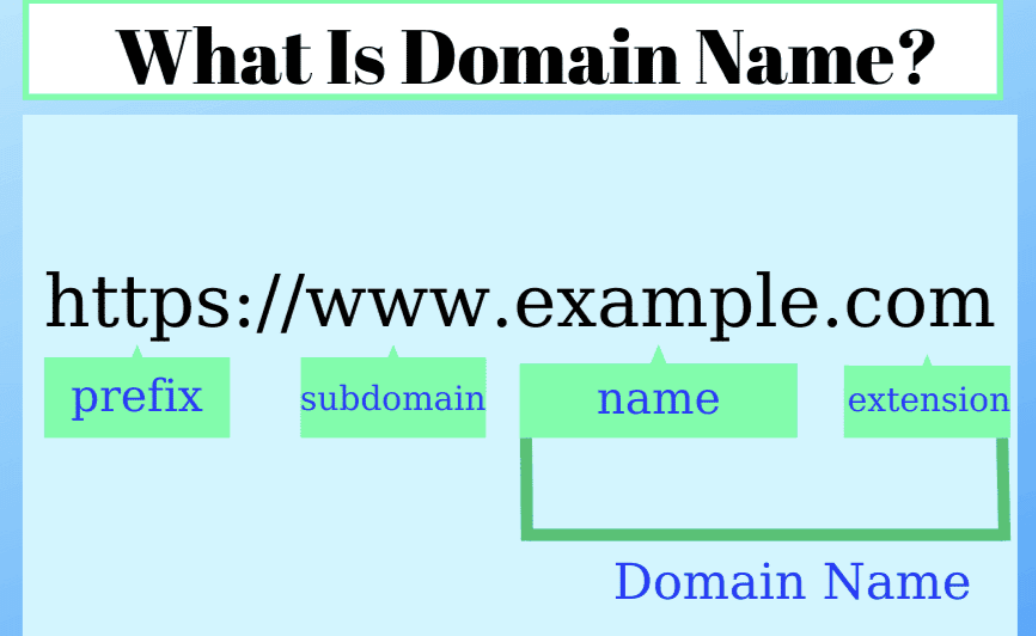
A website domain is the human-readable name people use to reach a website or online service. For example, in example.com, “example” is the domain name’s second-level portion and “.com” is the top-level domain.
Without domain names, people would generally need to remember numerical or alphanumeric IP addresses to reach internet services. The Domain Name System (DNS) translates human-readable domain names into information that internet-connected systems can use to locate services.
For a more detailed explanation, see r6.
What is the difference between a domain name and a URL?
These terms are often used interchangeably, but they are not exactly the same.
- Domain name: The registered name, such as
example.com. - URL: A complete web address, such as
https://example.com/products/shoes. - DNS: The system that helps translate domain names into the information required to locate internet services.
- Web hosting: The infrastructure where your website’s files and applications are hosted.
You can change your web hosting provider without necessarily changing your domain. You can also change DNS settings to point your existing domain toward different hosting infrastructure. Google describes changing DNS records as part of moving a site between hosting environments without changing its visible URLs. r7
How do I buy a domain name?
Buying a domain name is relatively straightforward. The process normally involves finding a registrar, searching for an available domain, reviewing pricing and terms, and completing registration.
- Think of several domain ideas. Have alternatives ready in case your first choice is unavailable.
- Choose a registrar. Compare registration prices, renewal prices, transfer policies, security features, and support.
- Search for availability. Enter your preferred domain and check whether it can be registered.
- Review the extension. Compare .com, country-code domains, and relevant newer TLDs.
- Check the total cost. Look beyond introductory pricing and check the renewal price.
- Register the domain. Enter the required registration information and complete payment.
- Configure security. Enable account security, domain locking, and other available protections.
- Turn on automatic renewal. Verify that your payment method will remain valid.
Cloudflare’s current domain registration guide similarly recommends searching for the name, comparing TLD and pricing options, selecting a registrar, completing the purchase, and renewing the registration before expiration. r8
How do I choose a domain name?
Choosing a domain is more important than simply finding an available name. A domain can become part of your brand, email address, advertising, packaging, social profiles, and customer recognition for years.
Look for a name that is:
- Easy to pronounce.
- Easy to spell.
- Easy to remember.
- Short enough to type comfortably.
- Relevant to your brand or project.
- Flexible enough to survive future business changes.
- Free from obvious trademark conflicts.
Be cautious with excessive hyphens, confusing spelling, numbers that need explanation, and names that lock your business into a narrow product category.
For example, if you may eventually sell several types of products, a domain based on a single product can become restrictive. A broader brand name may provide more room to expand.
Should I choose .com or another domain extension?
There is no universal requirement that a website use .com. Your choice should depend on your audience, brand, location, availability, and business purpose.
Common choices include:
- .com — widely recognized and commonly used by commercial businesses.
- .org — commonly associated with organizations and nonprofits.
- Country-code TLDs — useful when a website is strongly associated with a particular country or market.
- Newer generic TLDs — can offer additional naming options when a preferred .com is unavailable.
Importantly, Google says the choice of top-level domain by itself does not determine whether a page will perform well in Google Search. Relevance and the overall quality of the site remain important. r9
Does the domain extension affect SEO?
A domain extension is not a shortcut to higher Google rankings. Google states that its systems aim to return relevant results regardless of the top-level domain.
That does not mean every TLD is identical for branding or user perception. A domain extension can influence how people perceive a website and may matter for geographic targeting, brand recognition, or user expectations.
Choose the extension that makes sense for your audience rather than choosing one solely because you expect it to provide a ranking advantage.
How much does a domain name cost?
There is no single universal domain price.
The cost can depend on:
- The domain extension.
- Whether the name is available for standard registration.
- Whether the domain is classified as premium.
- The registrar you use.
- Promotional introductory pricing.
- The renewal price.
- Privacy or other optional services.
- Local registration requirements for some TLDs.
This is why you should compare both the first-year price and renewal price. A domain advertised for a very low introductory price may have a substantially different renewal cost.
Cloudflare explains that domain prices can vary according to the TLD, demand, availability, registry pricing, and registrar pricing. r10
Is it better to register a domain for one year or several years?
It depends on your circumstances.
A one-year registration gives you flexibility and a lower initial commitment. A multi-year registration can be convenient if you already know that the domain is important to you and you want to reduce the frequency of manual renewals.
For an established brand domain that you expect to use for years, a longer registration period can make administrative management easier. But regardless of the registration term, automatic renewal remains important.
What is domain renewal?
Domain renewal is the process of extending your registration before it expires.
Suppose you register a domain for one year. When that registration period ends, you need to renew it to continue using the domain. If you register for multiple years, the renewal deadline occurs later, but the same principle applies.
ICANN advises domain holders to understand their registrar’s renewal and expiration terms, pay applicable fees on time, and maintain current contact information. r11
How do I prevent my domain from expiring?
The safest approach is to use several layers of protection instead of relying on memory.
- Enable automatic renewal.
- Keep your payment information current.
- Use an email address that you actively monitor for registrar notifications.
- Set an independent calendar reminder before expiration.
- Check the domain’s expiration date periodically.
- Secure your registrar account with multi-factor authentication.
- Keep important domain records and DNS configurations backed up.
Automatic renewal is particularly useful because it reduces the chance of losing a domain simply because you forgot a renewal date. However, automatic renewal is not foolproof: an expired payment method, billing problem, account issue, or registrar notification problem can still create risk.
How do I secure a domain name?
If you’re searching for how to secure a domain name, focus on protecting both the domain itself and the account that controls it.
Start with these measures:
- Use a reputable registrar.
- Enable multi-factor authentication (MFA/2FA).
- Use a strong, unique registrar password.
- Enable registrar lock.
- Keep registrant information accurate.
- Protect the email account associated with your domain.
- Watch for phishing emails.
- Enable DNSSEC when appropriate and supported.
- Monitor domain expiration.
Domain security is especially important because control of a domain can affect your website, email, DNS records, redirects, and other online services.
ICANN explains that a locked domain may use a status such as “Registrar Lock” or “Client Transfer Prohibited” to help prevent unauthorized changes or transfers. r12
What is registrar lock?
Registrar lock is a security control that can prevent unauthorized transfer of a domain to another registrar.
It is sometimes displayed using terminology such as clientTransferProhibited. When you legitimately need to transfer your domain, you may need to unlock it first.
ICANN says registrars must provide a reasonable method for the registered name holder to remove the lock, and if the registrar does not provide self-service unlocking, it should unlock the domain within five calendar days of a request under the applicable policy. r13
What is DNSSEC and should I use it?
DNSSEC stands for Domain Name System Security Extensions. It adds cryptographic signatures to DNS information so systems can verify that DNS responses came from the appropriate authoritative source and were not altered.
DNSSEC is different from registrar security. Registrar security protects your account and domain registration, while DNSSEC helps protect the integrity of DNS data.
Cloudflare’s technical documentation explains that DNSSEC adds cryptographic signatures to DNS records and allows responses to be validated. r14
If your DNS provider and domain extension support DNSSEC, it can be a valuable additional security layer, particularly for important business domains.
Should I buy domain privacy?
Domain privacy is designed to reduce the public exposure of personal contact information associated with a domain registration where the applicable registry and privacy rules allow it.
Whether privacy protection is included, optional, or handled differently depends on the registrar, TLD, and applicable requirements.
Before paying for an additional privacy service, check exactly what information your registrar already protects and what the service actually provides.
Can someone steal or hijack my domain name?
Domain hijacking is possible, although the specific attack methods vary. An attacker who gains control of your registrar account, email account, or other authorization mechanism may potentially make unauthorized changes to your domain.
Common protective measures include MFA, strong passwords, registrar locking, secure email accounts, careful handling of authorization codes, and vigilance against phishing.
A domain should be treated as an important digital asset, especially if it controls your company’s website and email.
What happens if I forget to renew my domain?
The exact process depends on the registrar and TLD, but an expired domain does not necessarily become immediately available to somebody else.
There can be post-expiration periods during which renewal or restoration may still be possible. However, you should never rely on those periods as a normal renewal strategy.
ICANN warns that failing to renew can result in losing the domain, potentially permanently. r15
If your domain has already expired, contact the current registrar immediately and ask what recovery or renewal options are available.
Can I recover an expired domain?
Sometimes, but there is no universal guarantee.
The available options depend on how far the domain has progressed through the registrar’s expiration and deletion process. A domain that is still recoverable through the current registrar may be treated very differently from a domain that has already been deleted and returned to the registration pool.
ICANN notes that it does not have authority to transfer expired domains back to registrants. Your registrar’s policies and the registry’s rules are therefore extremely important. r16
How do I buy a domain name that someone else owns?
If the domain you want is already registered, you generally cannot simply register it yourself.
Possible approaches include:
- Contacting the current registrant and negotiating a purchase.
- Using a legitimate domain marketplace or broker.
- Choosing a different domain.
- Monitoring the domain if the current registration eventually expires.
- Using an applicable dispute-resolution process when there is a legitimate trademark or abusive-registration issue.
ICANN explains that when someone else has registered a domain you want, possible options can include negotiating with the registrant, waiting to see whether the registration expires, or pursuing applicable legal or administrative remedies in appropriate circumstances. r17
How do I check whether a domain name is available?
Use a domain registrar’s search tool and enter the exact name you want.
If your preferred example.com is unavailable, don’t immediately choose a complicated alternative. Consider whether a different brand name or relevant TLD would create a cleaner long-term identity.
Also search for obvious variations and check whether the proposed name creates potential trademark or brand-confusion issues before committing to it.
Should I register multiple versions of my domain?
Sometimes.
A business may decide to register variations that are particularly important for brand protection, such as common misspellings or strategically important extensions. The decision depends on the value of the brand, budget, market, and risk.
However, buying dozens of domains is not automatically necessary. Start with the domain names that provide a clear business or defensive purpose.
Can I change my domain name later?
Yes, you can change your domain name later. But changing the domain of an established website is more involved than simply buying a new domain and pointing it to the same hosting account.
If your website already has organic traffic, backlinks, indexed pages, email addresses, bookmarks, and established customers, changing domains should be treated as a website migration.
Google’s current guidance for domain changes recommends preparing and testing the new site, mapping old URLs to their corresponding new URLs, implementing redirects, monitoring traffic, updating sitemaps, and using Google’s Change of Address tool for applicable domain migrations. r18
How do I change my domain name without losing SEO?
No migration method can promise that rankings or traffic will remain exactly the same, but careful implementation can reduce avoidable problems.
A typical migration involves:
- Register the new domain.
- Build and test the new version of the site.
- Create a complete old-URL-to-new-URL mapping.
- Implement permanent server-side redirects from old URLs to the corresponding new URLs.
- Update internal links.
- Update canonical URLs.
- Update XML sitemaps.
- Verify the new domain in Google Search Console.
- Submit the Change of Address request where applicable.
- Monitor crawling, indexing, traffic, and errors.
Google specifically recommends mapping old URLs to their new destinations and using redirects during domain migrations. r19
Google also says that a properly executed site move should not result in lasting traffic loss, although temporary fluctuations can occur while search systems process the migration. r20
Can I change my domain name but keep my website?
Yes. Your domain and web hosting are separate components.
You can register a new domain, configure DNS, move or copy your website, and redirect the old domain to the new one. The exact process depends on your hosting provider and website platform.
If you’re changing only hosting infrastructure while keeping the same public URLs, Google treats that differently from a domain migration. In that case, the primary technical change is generally DNS and infrastructure rather than a URL migration. r21
How long does a domain name transfer take?
A domain transfer between registrars can involve authorization and approval steps, and the exact experience varies by registrar and domain extension.
For domains subject to ICANN’s registrar transfer policy, the gaining registrar initiates the transfer and authorization is required. ICANN’s standardized authorization material states that a transfer will take place within five calendar days unless the current registrar denies the request. r22
However, a transfer can take longer from the user’s perspective if you need to unlock the domain, obtain an authorization code, resolve contact-information issues, or deal with a transfer restriction.
Why can’t I transfer my domain to another registrar?
There are several possible reasons.
Under ICANN’s policies, transfers can be restricted in circumstances including the first 60 days after initial registration, certain 60-day Change of Registrant locks, and the period following a previous registrar transfer. A domain may also be locked by the registrar or subject to certain dispute, fraud, payment, or authorization circumstances. r23
If you’re planning to transfer a domain, check its current lock status and make sure you have access to the registered contact information and authorization mechanism required by your registrar.
What is an authorization code for a domain transfer?
An AuthInfo code, also called an authorization code, transfer code, or EPP code in many contexts, is used to help authorize a domain transfer.
ICANN describes the AuthInfo code as a unique code used to identify and help authorize the domain name holder during the transfer process. r24
Keep this information private. If someone obtains the credentials or authorization information needed to transfer your domain, they may be able to attempt an unauthorized transfer.
Should I buy my domain and hosting from the same company?
No. You can purchase a domain from one provider and hosting from another.
Keeping both services with one company can simplify administration, while separating them can give you greater flexibility when changing hosting providers or other services.
The important thing is to understand which company controls your domain registration, which company provides DNS, and which company hosts your website.
Do I need web hosting to buy a domain?
No.
You can register a domain without immediately purchasing web hosting. The domain can remain registered while you decide what website, email service, application, or other online service you want to connect to it.
This can be useful when you’re securing a brand name before launching a website.
Can I use a domain for email without a website?
Yes. A domain does not have to host a website to be used for email.
For example, a domain can be configured with appropriate DNS records for an email provider while the website itself is hosted elsewhere—or does not exist at all.
This is another reason domain security matters: losing control of a business domain can potentially affect both the website and email services associated with it.
Why do we need the Domain Name System?
The Domain Name System (DNS) makes the internet easier to use by connecting human-readable domain names with the information needed to locate internet services.
People are much more likely to remember a name such as example.com than a numerical IP address. DNS also allows the underlying infrastructure to change while the familiar domain name remains the same.
Cloudflare describes DNS as the system that maps human-friendly domain names to IP addresses and explains why this makes websites easier to access. r25
What should I look for in a domain registrar?
Don’t compare registrars solely on the first-year promotional price.
Look at:
- First-year registration price.
- Normal renewal price.
- Transfer fees and policies.
- Domain privacy options.
- Account security and MFA.
- Registrar lock controls.
- DNS management.
- DNSSEC support.
- Customer support.
- Expiration and renewal policies.
- Ease of obtaining transfer authorization codes.
- Whether the registrar is appropriately accredited or operates through a legitimate registrar relationship.
ICANN recommends that registrants understand who their registrar is and provides an accredited registrar directory and related registration resources. r26
What are the biggest mistakes people make when buying a domain?
Several mistakes are surprisingly common.
Choosing a domain that’s too complicated
If customers constantly need to ask how to spell your domain, it may not be ideal for a long-term brand.
Looking only at the introductory price
Always check renewal pricing before registering. The price you pay initially may not be the price you pay in subsequent years.
Forgetting about renewal
A domain can be valuable for years and still be lost because an automatic renewal failed or the owner ignored expiration notices.
Using an unsecured email account
Your registrar account email is an important security point. Protect it with a strong password and MFA where available.
Ignoring domain locks
Registrar lock can help prevent unauthorized transfers, so understand how it works and how to disable it when you legitimately need to transfer your domain.
Changing domains without planning for SEO
Established websites should treat a domain change as a migration, with URL mapping, redirects, Search Console configuration, and monitoring.
Is buying a domain name a good long-term investment?
A domain can be an important digital asset for a business, organization, personal brand, or project, but its value depends heavily on the name and its intended use.
A domain you use for your established business can be strategically important because it may be connected to your website, email addresses, marketing materials, customer relationships, and search visibility.
That doesn’t mean every domain is financially valuable or that registering large numbers of domains will automatically produce a return. Think of a domain primarily as an address and brand asset unless you have a specific, well-researched reason to treat it as an investment.
How can I protect a domain for the next 10 years?
If your goal is to keep a domain continuously registered for the next decade, create a simple domain-management system.
- Register the domain for a long period if the TLD and registrar permit it.
- Enable automatic renewal.
- Use MFA on your registrar account.
- Enable registrar lock.
- Protect your email account.
- Keep payment details current.
- Monitor expiration dates.
- Keep registrant information accurate.
- Enable DNSSEC where appropriate.
- Keep a secure record of DNS configuration and account recovery information.
The objective is redundancy: if you forget a renewal date, automatic renewal helps; if an attacker tries a transfer, registrar locking adds protection; if someone targets your account, MFA creates another barrier.
Domain security checklist
- ☐ Use a reputable domain registrar.
- ☐ Choose a strong, unique registrar password.
- ☐ Enable MFA or 2FA.
- ☐ Enable registrar/domain lock.
- ☐ Protect the email account linked to your domain.
- ☐ Keep contact information accurate.
- ☐ Enable automatic renewal.
- ☐ Keep your payment method updated.
- ☐ Monitor expiration dates.
- ☐ Watch carefully for registrar phishing emails.
- ☐ Consider DNSSEC where supported.
- ☐ Keep important DNS records documented.
Frequently asked questions about buying a domain permanently
Can I buy a domain name forever?
No. Domain names are registered for defined periods rather than purchased as permanent property. You can maintain continuous control by renewing the registration before expiration. ICANN says registrations are typically for one to 10 years. r27
How do I purchase a domain name permanently?
You cannot purchase one permanently with a single lifetime payment. Instead, register the domain for the longest suitable period available, enable automatic renewal, maintain current payment information, secure your registrar account, and renew continuously.
How do I purchase a domain name forever?
The practical answer is continuous renewal. There is no normal “forever domain” registration that eliminates the need for future renewal.
How many years can I register a domain name?
Many common domains can be registered for up to 10 years at a time, although rules vary by domain extension. Check the specific TLD’s registration terms before purchasing.
Can I register a .com domain for 10 years?
Yes, .com domains can generally be registered for up to 10 years at a time. You still need to renew the registration when the term ends.
Can I change my domain name after buying it?
You cannot simply rename an existing domain registration. Instead, you normally register a new domain and migrate the website, email, DNS, and other services as appropriate.
Can I change my domain name without changing hosting?
Yes. Domain registration and hosting are separate services. You can configure the new domain to use the existing hosting environment, although an established website may require redirects and other migration work.
How long does a domain transfer take?
For ICANN-governed registrar transfers, the transfer process can complete within five calendar days under the applicable process unless the current registrar denies it, but preparation and registrar-specific steps can make the overall experience longer. r28
Can I transfer a domain immediately after registering it?
Generally, an ICANN-governed domain cannot be transferred to another registrar during the first 60 days after initial registration. Certain other 60-day restrictions can also apply. r29
What happens if my domain expires?
The domain enters the registrar’s applicable expiration and deletion process. Depending on timing and the TLD’s rules, you may have an opportunity to renew or restore it, but eventually an expired domain can be deleted and become available for registration again. Do not rely on a grace period; renew before expiration whenever possible. r30
Is domain privacy necessary?
Privacy can be useful for reducing exposure of personal registration information where privacy protection is available. The exact information displayed and privacy mechanisms depend on the registrar and TLD.
Does buying a domain for 10 years improve SEO?
Registering a domain for a longer period is not a shortcut to higher Google rankings. Domain registration length should primarily be considered an administrative and continuity decision rather than an SEO strategy.
Does .com rank better than other domain extensions?
Google says its search systems do not inherently favor a particular top-level domain simply because of the extension. Choose a TLD that fits your audience and brand rather than relying on the extension alone for SEO. r31
Should I buy a domain before building my website?
If you have already chosen your brand name, registering the domain early can prevent someone else from registering it. You do not need hosting or a finished website to register a domain.
What is the safest way to keep a domain permanently?
The safest practical approach is continuous registration combined with automatic renewal, MFA, registrar locking, secure account recovery, accurate contact information, and regular monitoring.
Final thoughts: the best way to “own” a domain forever
If your goal is to buy a domain name permanently, change the way you think about the word “permanently.” A domain isn’t normally a one-time purchase that can never expire. It is a registration that you maintain over time.
The good news is that keeping an important domain for decades is entirely practical when you manage it properly.
Choose a domain that will still make sense years from now. Compare the registrar’s renewal pricing and policies. Register for a suitable long term. Turn on automatic renewal. Protect your registrar and email accounts with MFA. Enable domain locking. Consider DNSSEC. Keep your information and payment details current. And monitor the domain instead of assuming that automatic renewal makes it completely maintenance-free.
If you follow those steps, you can make your domain registration highly resilient and dramatically reduce the risk of accidentally losing the online address your business or project depends on.
Authoritative resources and further reading
- ICANN: Renewing Domain Names — official guidance on domain registration, renewal, expiration, and keeping contact information current. r32
- ICANN: Transferring Your Domain Name — information about registrar transfers, authorization, and transfer restrictions. r33
- ICANN: About Locked Domain — explanation of registrar locks and transfer protection. r34
- Cloudflare: How to Buy a Domain Name — practical explanation of domain registration, DNS, pricing, and renewal. r35
- Cloudflare: DNSSEC — technical information about protecting DNS with cryptographic signatures. r36
- Google Search Central: Site Moves With URL Changes — official guidance for changing domains while managing redirects, URL mapping, Search Console, and indexing. r37